ZED Gold is Level 3 in the published three-level ZED Certification structure for manufacturing MSMEs. It focuses on the applicable assessment requirements for businesses working towards stronger quality systems, disciplined manufacturing processes and responsible resource utilisation. Understand the Gold-level criteria, review your existing practices and prepare the relevant records before proceeding with the official application and assessment process.
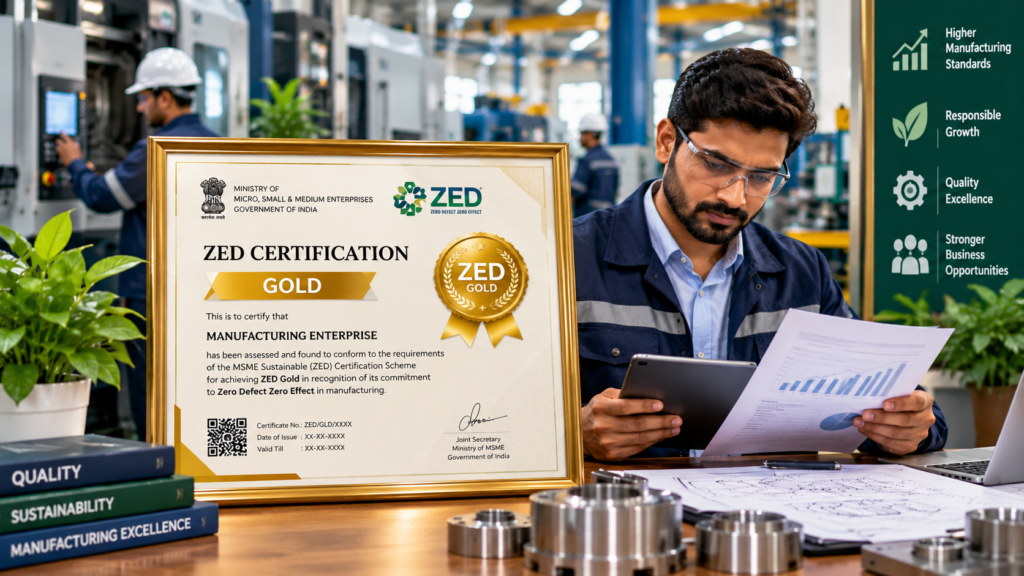
ZED Gold Certification is Level 3 of the MSME Sustainable (ZED) Certification Scheme. It is intended for manufacturing MSMEs seeking to demonstrate conformity with the applicable Gold-level assessment requirements across a broader range of manufacturing practices, management systems and environmental considerations.
The assessment framework covers areas such as leadership, quality management, process control, human resource management, risk management, supply chain management, technology upgradation and natural resource conservation. Reviewing these areas helps a business understand its current practices, identify improvement opportunities and prepare for the relevant assessment criteria.
Through the ZED framework, businesses can review relevant operational practices, identify gaps and understand where improvements may be needed. The Silver-level assessment follows the applicable scheme criteria, so businesses should review the current official guidelines before applying.
As manufacturing businesses develop, maintaining product quality alone may not be enough to address every operational challenge. Consistent work practices, reliable equipment, employee participation, controlled processes and responsible resource use can all contribute to a more structured manufacturing system.
ZED Gold provides an assessment framework for reviewing these broader areas against the applicable scheme criteria. Businesses can use the preparation process to examine existing procedures, organise supporting information, identify gaps and understand where improvement may be required.
Gold Certification is not an automatic reward for reaching a particular turnover or company size. Applicants must meet the applicable requirements for the selected level and complete the official assessment process.
This process can help a business build greater awareness of quality, operational performance and continuous improvement. The assessment is based on the official scheme requirements and should not be treated as a replacement for other applicable legal obligations or certifications.
Certification Level: Level 3
Designed For: Eligible manufacturing MSMEs
Assessment Framework: 20 manufacturing parameters in the published scheme guidelines
Main Focus: Quality, operational systems, resource efficiency and continuous improvement
Certification Outcome: Subject to applicable criteria and the official assessment decision
Gold-level preparation encourages businesses to review quality management, product-related controls and process consistency. This can help identify weaknesses in inspection practices, documentation or corrective actions and highlight areas where quality systems may need improvement.
Reviewing process control, equipment maintenance, calibration, daily work management and material handling can help businesses understand how consistently manufacturing activities are managed. These reviews may reveal opportunities to improve reliability, reduce avoidable disruption and strengthen internal procedures.
Energy management, environment management, waste management and natural resource conservation are part of the broader ZED assessment framework. Understanding these areas can help manufacturers review current practices and identify practical ways to use resources more responsibly.
Reviewing risk, supply chain management, technology selection and employee-related practices can help businesses identify improvement priorities and plan better systems. A structured review may also help an enterprise prepare for customer expectations and future business opportunities, although certification alone does not guarantee contracts or market access.
ZED Gold assessment covers a broad range of manufacturing practices, from leadership and quality management to supply chain performance, technology upgradation and environmental responsibility. Reviewing these parameters helps businesses understand the systems, working practices and supporting evidence that may be relevant to their assessment.
The descriptions below explain the purpose of each area in practical language. Actual assessment criteria, evidence requirements and applicability must be checked against the current official ZED guidelines.
1. Leadership: Reviews management commitment, responsibilities and efforts to establish quality-focused working practices.
2. Human Resource Management: Covers relevant employee-related practices, role clarity, skills and awareness needed to support manufacturing operations. 3. Occupational (Workplace) Safety: Focuses on workplace hazards, safety practices and measures that help protect workers during production activities. 4. Corporate Social Responsibility (CSR): Considers the enterprise's relevant responsibilities towards people, society and ethical business practices under applicable criteria.
5. Measurement of Timely Delivery: Reviews how an enterprise monitors delivery commitments, identifies delays and tracks fulfilment of customer orders.
6. Quality Management: Covers the practices used to maintain product consistency, identify defects and manage quality-related issues.
7. Product Quality & Safety (Testing/Certification): Focuses on relevant product testing, safety-related requirements and applicable quality or product certification evidence.
8. Measurement & Analysis: Reviews how operational information and performance data are collected and analysed to identify gaps and guide improvements.
9. Swachh Workplace: Reviews workplace cleanliness, housekeeping and the organisation of production areas.
10. Daily Works Management: Focuses on the planning, coordination and monitoring of routine work activities.
11. Process Control: Covers the methods used to maintain consistent production processes and identify process-related issues.
12. Material Management: Reviews how materials are received, stored, handled and managed to support production and reduce avoidable losses.
13. Energy Management: Reviews energy-use practices and opportunities to improve the efficiency of energy consumption.
14. Environment Management: Covers relevant environmental practices, controls and efforts to reduce adverse impacts from manufacturing activities. 15. Waste Management (Muda, Mura, Muri): Examines approaches to identifying waste, unevenness and overburden in operations, supporting more efficient processes.
16. Natural Resource Conservation: Focuses on the responsible use and conservation of resources relevant to the enterprise's operations.
17. Planned Maintenance & Calibration: Reviews how equipment maintenance and measurement-instrument calibration are planned and managed.
18. Supply Chain Management: Covers the coordination of suppliers, materials and related activities that support reliable production.
19. Risk Management: Focuses on identifying relevant operational risks and considering measures to reduce or manage their impact.
20. Technology Selection & Upgradation: Reviews how technology choices and upgrades support process capability, productivity and manufacturing needs.
These 20 parameters describe the broader manufacturing assessment framework published in the ZED scheme guidelines. The evidence, maturity expectations and parameter applicability depend on the current scheme documents and the certification level. Before applying, check the latest official assessment manual and organise relevant business records for your manufacturing unit.
ZED Gold assessment covers a broad range of manufacturing practices, including quality management, operational control, employee-related systems, equipment maintenance, risk management and environmental responsibility. Before applying, your business should review the eligibility conditions, understand the applicable Gold-level criteria and organise the information needed to demonstrate its current practices.
Preparation does not guarantee certification, but it helps you understand the requirements and identify areas that may need attention before assessment.
ZED Gold assessment covers a broad range of manufacturing practices, including quality management, operational control, employee-related systems, equipment maintenance, risk management and environmental responsibility. Before applying, your business should review the eligibility conditions, understand the applicable Gold-level criteria and organise the information needed to demonstrate its current practices.
A structured internal review can help your team understand the assessment areas and organise useful supporting information.
• Quality systems: Review product inspection, quality records and corrective-action practices.
• Operational control: Understand production processes, daily work management and material handling.
• Equipment and measurement: Check relevant maintenance schedules, calibration records and performance information.
• People and safety: Review employee responsibilities, workplace safety practices and relevant training information.
• Environment and resources: Understand energy use, waste-management practices and applicable environmental controls.
• Risk and supply chain: Identify relevant operational risks and review supplier-related information where applicable.
This section is a general preparation guide, not an official eligibility determination or exhaustive assessment checklist. Confirm the latest Gold-level criteria, application route, documentation requirements and any level-progression conditions directly through the official ZED portal before applying.
ZED Gold assessment examines a wide range of manufacturing practices, so businesses should be prepared to explain how their systems work and provide relevant supporting evidence. Organised records can help demonstrate how quality is monitored, employees are supported, equipment is maintained, risks are managed and resources are used.
Before applying, review your existing documentation, identify information that may need updating and check the current official assessment checklist for your manufacturing unit. The examples below will help you start preparing in a structured way.
Keep the basic details of your enterprise accurate and readily accessible. This information helps establish which manufacturing unit is applying and provides a starting point for the certification process.
• Udyam Registration details and enterprise information
• Manufacturing unit address and business contact details
• Product and manufacturing activity information
• Relevant statutory licences and compliance records, where applicable
• Required ZED undertaking and other portal declarations Check that the details entered in the application match your actual business records. The exact documents and declarations must follow the current portal instructions.
Quality-related records help explain how the business checks its products, identifies problems and maintains consistency. Organise the records relevant to your actual products and manufacturing processes.
• Product specifications and inspection records
• Quality procedures and work instructions, where maintained
• Testing reports and applicable product certificates
• Records of defects, complaints and corrective actions, where applicable
• Customer feedback and delivery-performance information These records can help demonstrate how quality issues are identified, reviewed and addressed. Keep them current, accurate and traceable to the relevant product or process.
Manufacturing operations often depend on consistent process control, reliable machinery and suitable measurement equipment. Review how these activities are performed and what records are maintained by your team.
• Production process flow and routine work records
• Daily work monitoring and production information
• Equipment maintenance schedules and service records
• Calibration records for relevant measuring instruments
• Material receipt, storage, handling and stock information These examples can help explain how production activities are controlled, equipment is maintained and materials are managed. Use the records that are relevant to your unit and the criteria specified by the official assessment.
Employee awareness, responsibilities and workplace conditions are important parts of a well-managed manufacturing environment. Prepare relevant information that reflects how your business manages its workforce and safety practices.
• Employee roles and responsibilities, where documented
• Relevant skill, training and awareness records
• Workplace safety instructions and hazard-related records
• Safety inspections and corrective-action information, where applicable
• Housekeeping practices and workplace photographs The purpose is to help your team explain how people, safety and day-to-day working conditions are managed. Any records provided should reflect actual practices at the manufacturing unit.
ZED assessment includes environmental responsibility and resource-use practices. Review how your business monitors energy consumption, manages waste and addresses relevant environmental impacts.
• Available energy-use or consumption records
• Waste segregation, storage and disposal information, where relevant
• Applicable environmental permissions or compliance records
• Resource-use and conservation initiatives
• Photographs or records illustrating relevant environmental practices The applicable evidence will depend on the processes and environmental obligations of your unit. Do not prepare generic statements as proof; use genuine records and practices that apply to the business.
Gold assessment also covers wider business systems, including supply chain management, risk management and technology selection or upgradation. Consider how your business monitors these areas and what evidence is available.
• Supplier information and evaluation records, where maintained
• Relevant operational risk registers or risk-control records
• Details of technology used in manufacturing processes
• Equipment or process upgrade records, where applicable
• Relevant social responsibility or improvement initiatives This information can help explain how the business manages supply-related issues, considers operational risks and evaluates technology needs. The nature of the evidence depends on the size, activity and context of the enterprise.
ZED Gold certification involves formal application steps, document verification and an onsite assessment of the relevant manufacturing practices. Businesses should understand the applicable criteria, provide accurate information and prepare their supporting records before proceeding. A clear understanding of each stage can help your team organise its preparation and respond to assessment requirements.
Begin with registration on the official ZED portal using the required enterprise details. After completing the applicable registration formalities, the manufacturing MSME must complete the ZED Pledge before applying for a certification level. The pledge represents the business's commitment to the Zero Defect Zero Effect approach and to improving manufacturing quality and environmental responsibility. Prepare: Udyam Registration details, business information and the contact details required for portal verification.
The published scheme guidelines require the applicant MSME to provide an undertaking concerning relevant statutory and regulatory requirements and licences applicable to the functioning of its unit. Before completing this step, review the obligations relevant to your actual manufacturing activity and ensure the submitted declarations are accurate. This stage is important because the application should reflect the enterprise's real compliance position rather than relying on unsupported declarations. Prepare: Relevant licence and compliance details, together with any information requested by the current portal process. Prepare: Udyam Registration details, business information and the contact details required for portal verification.
The applicant provides the business and product information requested through the official portal. The published Gold-level guidelines mention details about manufactured products, quality certificates, operational processes and customer information. Supporting documents are uploaded and verified before proceeding to the onsite assessment. Examples may include product photographs, shop-floor photographs, product labelling or description images, and relevant quality or product certifications. The documents required for a particular unit depend on the applicable checklist and its manufacturing activity. Prepare: Clear product images, relevant certificates, operational information and any additional evidence requested through the portal.
Once the required information has been submitted and documents verified, the published Gold-level process calls for an onsite assessment by a QCI-accredited assessment agency. The assessment covers the applicable parameters and the requirements relevant to the manufacturing unit. The assessment checklist is made available through the official portal under the published process. Businesses should be prepared to explain their operational practices, provide requested evidence and help the assessor understand how relevant systems are implemented. Prepare: Relevant records, access to the manufacturing unit and the staff members who can explain their responsibilities and processes.
Following assessment, the findings are recorded and a recommendation is made under the scheme process. The business must fulfil the applicable requirements and follow any corrective-action instructions communicated through the official assessment process, where relevant. A certificate is issued only when the required conditions are fulfilled and the certification decision supports approval. Applying, uploading documents or completing an assessment does not by itself guarantee the award of ZED Gold Certification. What to remember: Keep assessment communications and any follow-up requirements organised, and refer to the official portal for the current status and next steps.
The process described here follows the ZED guidelines published by DC-MSME. Those guidelines state that scheme benefits and other provisions were valid through 31 March 2026, so applicants should verify any revised instructions on the official portal before relying on specific procedures, fees or benefit claims.
Considering ZED Gold Certification for your manufacturing business? Explore answers to common questions about eligibility, assessment requirements, documents, the application journey and the factors that determine certification. These FAQs provide a starting point before you review the latest requirements on the official ZED portal.
ZED Gold is Level 3 of the published three-level MSME Sustainable (ZED) Certification structure. It covers a broad range of manufacturing assessment areas, including quality management, equipment maintenance, process control, supply chain management, risk management and environmental responsibility. The purpose is to assess relevant practices against the applicable Gold-level criteria and encourage continuous improvement in manufacturing operations.
The ZED scheme is designed for eligible manufacturing MSMEs registered on the Udyam Registration Portal. Applicants should confirm their enterprise details, manufacturing activity and compliance with the latest scheme conditions before choosing Gold level. The official portal should be checked for current eligibility requirements and the applicable application route.
The published assessment framework covers 20 parameters, including Leadership, Quality Management, Occupational Safety, Human Resource Management, Process Control, Planned Maintenance & Calibration, Energy Management, Environment Management, Supply Chain Management, Risk Management and Technology Selection & Upgradation. The detailed assessment criteria and evidence requirements should be checked in the current official Gold-level guidelines.
Depending on the current application checklist and your manufacturing activity, useful records may include Udyam and unit details, product information, quality or product certificates, process documentation, maintenance and calibration records, relevant compliance information and supporting photographs. This is a preparation guide, not an exhaustive mandatory document list. Follow the official portal’s current instructions for the documents required from your unit.
Yes. The published Gold-level process includes an onsite assessment of the manufacturing unit by an assessment agency under the applicable scheme arrangements. Businesses should be prepared to explain their operating practices, make relevant records available and respond to assessment-related questions. Confirm the current assessment procedure through the official portal before applying.
Gold is Level 3 in the published ZED structure, but the precise eligibility and level-selection conditions must be confirmed from the current scheme rules. Do not assume that a Silver certificate is either mandatory or unnecessary without checking the live portal instructions for your application.
If the assessment identifies non-conformities, the business should follow the instructions, corrective-action requirements and timelines communicated through the official assessment process, where applicable. Certification depends on meeting the applicable criteria and receiving the required certification decision. Submission or assessment alone does not guarantee approval.
No. Financial assistance, subsidies and other benefits are subject to the scheme provisions currently in force, enterprise eligibility, approved expenses and applicable conditions. The Ministry of MSME’s 2025–26 Annual Report published financial assistance provisions for ZED, but applicants should confirm current benefit amounts, certification fees and eligibility rules through the latest official portal guidance before making a financial commitment.
Note: FAQs reference the published Ministry scheme materials and MSME CHAMPIONS information. Since the scheme can be revised, verify current procedures, fees and benefits on the official portal before publication.
Gold-level assessment covers multiple aspects of manufacturing operations, including quality management, process control, equipment maintenance, risk management and environmental responsibility. Preparing for these requirements starts with understanding your current practices, reviewing relevant records and identifying areas that may need improvement.
Bharat Compliance Solution can help you understand the ZED Gold certification journey, review applicable requirements and organise your application preparation. Connect with our team to discuss your manufacturing business and understand the next steps before proceeding through the official scheme process.